A bold call for a TrkiyeRussiaChina alliance marks the deepest ideological shift in Turkish nationalism since the Cold War and a test of Erdoans strategic balancing act
For decades, Turkish nationalism marched under the NATO flag. But now, one of Türkiye's most influential right-wing leaders is calling for a turn East - toward Russia and China. His proposal may mark the country's clearest ideological break with Atlanticism since joining the Alliance.
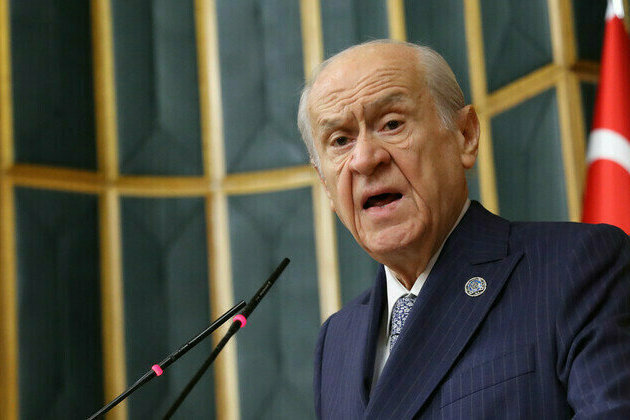
In September, Türkiye's political landscape was shaken by a statement that many experts called sensational and potentially transformative. Devlet Bahceli, leader of the Nationalist Movement Party (MHP) and a long-time ally of President Recep Tayyip Erdogan within the People's Alliance, proposed the establishment of a strategic trilateral alliance involving Türkiye, Russia, and China to counter the "US-Israel evil coalition."
Bahceli emphasized that such an alliance is "the most suitable option, considering reason, diplomacy, the spirit of politics, geographical conditions, and the strategic environment of the new century." The proposal extends far beyond the usual nationalist agenda, positioning Türkiye as a player capable of initiating new formats of international cooperation.
To grasp the importance of this statement, we must note the historical context. Turkish pan-Turkism has traditionally been oriented toward the West, and nationalists were seen as staunch defenders of the pro-Atlantic course. In this light, Bahceli's call for an alliance with Moscow and Beijing marks a symbolic break from that tradition, reflecting growing distrust toward NATO and the US within Türkiye's political landscape.
Bahceli's comments are not random. Over the past few years, he has steadily ramped up his criticism of the West, advocating for Türkiye's sovereign development "beyond blocs and alliances." But this is the first time he has explicitly named Russia and China as preferred partners.
Reactions inside Türkiye were mixed. Right-wing circles called Bahceli's words "revolutionary," while leftists saw them as confirmation of a broader anti-Western consensus. Internationally, the statement underscored Ankara's growing distance from Western power centers and its gradual rhetorical shift toward the East and Greater Eurasia.
Shortly afterward, Erdogan made a cautious comment, saying he was "not fully familiar" with Bahceli's initiative but adding, "Whatever is good, let it happen." The ambiguity is typical for Erdogan, who avoids publicly rejecting the ideas of key allies while keeping his political options open.
On one hand, the president is wary of provoking open conflict with Western partners, given Türkiye's economic vulnerabilities. On the other, his comments suggest that Bahceli's initiative could serve as leverage - a way to pressure the US and EU by signaling that Ankara might strengthen ties with Moscow and Beijing.
A day later, Bahceli clarified his position, saying, "We know what we are doing. Türkiye should not be the implementer of regional and global projects put forward by others, but rather must be the leading actor of its own unique projects."
In other words, Bahceli not only intensified his anti-Western rhetoric but also asserted Türkiye's claim to be an independent power center in the emerging multipolar world order. His stance reflects the desire of part of Türkiye's leadership to move from being a peripheral NATO ally to a pioneer of alternative alliances in Eurasia.
From NATO loyalism to Eurasian realism
For decades, Türkiye was one of NATO's most loyal allies. Since the Cold War, the Turkish elite believed that integration into Euro-Atlantic structures was the only viable strategy. A world order based on American leadership seemed stable and predictable.
Erdogan shared similar views when he first became prime minister in 2002. But as global competition intensified, disagreements with Washington deepened, and multipolar trends gained momentum, he realized that the unipolar system could not last. Türkiye, he concluded, must adapt - and play a role in shaping the new order.
Seen in this light, Bahceli's proposal is more than nationalist fervor. It reflects an understanding among parts of Türkiye's leadership that the country's future lies in greater strategic autonomy and in building ties with alternative centers of power. His words echo those within Erdoan's circle who believe Türkiye can assert itself only through closer engagement with Russia and China.
This shift reveals how Türkiye's elites have moved from trusting the stability of a Western-centric system to recognizing its limits - and searching for new frameworks in which Ankara can act as a key player rather than a subordinate.
Redefining Türkiye's place in the world
Bahceli's remarks highlight deep shifts within Turkish nationalist circles and Ankara's growing readiness to reconsider its global role. He argues that neither China nor Russia is Türkiye's enemy, despite efforts by Western ideologues to claim otherwise. Instead, he sees the West as the true obstacle - determined to prevent Türkiye from becoming an independent power center and confining it to a role of "watchdog" in the Middle East.
In his latest statement, Bahceli stressed the need for a new strategy:
"We believe that Türkiye, located at the center of Eurasia, which is the strategic focus of the 21st century, should pursue multidimensional and long-term policies aimed at strengthening regional peace and stability and developing cooperation opportunities, especially with countries in the Black Sea and Caspian Basin, including Russia, China, and Iran. Considering the changing and complex structure of international relations, producing permanent and comprehensive solutions to global issues such as terrorism, illegal migration, and climate change is a responsibility that no country can achieve alone."
Essentially, Bahceli is saying that Türkiye must transcend old constraints and stop being a tool in the hands of external forces. His stance embodies a new paradigm: only through an independent, multilateral, and Eurasian policy can Türkiye become a true architect of regional stability and a major player in the future global order.
The end of oscillation
Türkiye has long oscillated between Atlantic alignment and independent ambition. These cycles rarely evolved into a lasting doctrine. But the current geopolitical environment is forcing Ankara to make a choice.
Economic dependency, regional instability, and Israel's aggressive behavior - including attacks on Iran and Qatar - have created a sense of urgency. In Ankara, some now fear that Türkiye itself could become a target.
Globally, the old unipolar order is losing balance, and an alliance with Russia and China may offer Türkiye not guarantees, but strategic advantages - especially in securing its autonomy and status as an independent power center.
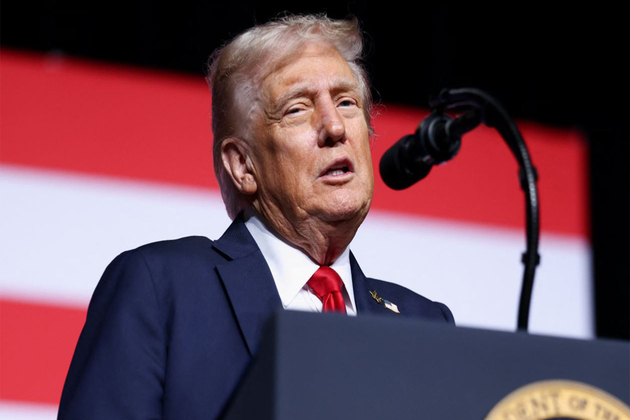
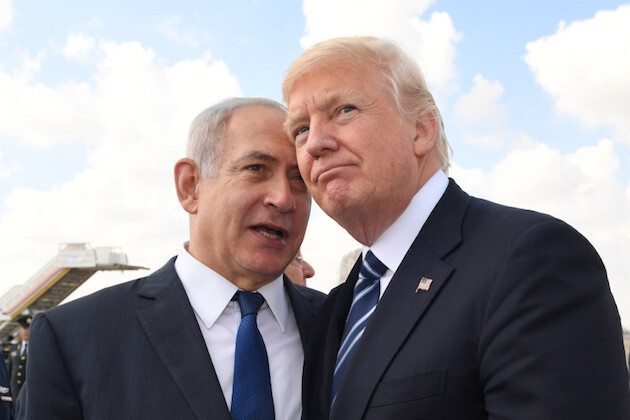
At the UN General Assembly, US President Donald Trump urged Erdogan to stop buying Russian oil and even floated bringing Türkiye into the anti-Russia sanctions regime. For Ankara, that would mean economic damage and deeper dependence on the West - a risk the leadership is no longer willing to accept.
Bahceli's initiative, and Erdogan's carefully measured reaction, mark a pivotal moment. Türkiye is beginning to institutionalize its search for an alternative political philosophy - one grounded in multipolarity, strategic pragmatism, and a redefined vision of its place in the 21st century.
(RT.com)



 Share
Share
 Tweet
Tweet
 Share
Share
 Flip
Flip
 Email
Email