Xinhua
20 Oct 2025, 18:22 GMT+10
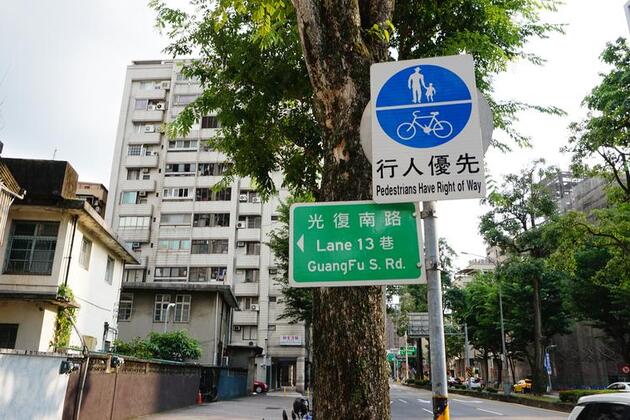
TAIPEI, Oct. 20 (Xinhua) -- On a bustling avenue running north to south through downtown Taipei, cars weave through morning traffic, neon signs flicker to life, and office workers hurry past cafes and convenience stores, rarely pausing to consider the street name that accompanies them each day -- Guangfu North Road and Guangfu South Road.
The word "Guangfu" means restoration in Chinese.
For those who are familiar with Taiwan's earlier days, the name carries the weight of history, serving as a reminder of the island's restoration to China in 1945 after 50 years under Japanese colonial rule.
Eighty years after the historic moment, careful observers still spot "Guangfu" in the names of streets, markets, railway stations, bridges and towns across the island.
In 1895, following its defeat in a war with Japan, the Qing government was forced to cede Taiwan and the Penghu Islands to Japan. Fifty years later, after 14 years of relentless struggle, the Chinese people overcame Japanese aggression during World War II, leading to Taiwan's restoration to the motherland.
On Oct. 25, 1945, the ceremony to accept Japan's surrender in the Taiwan Province of the China war theater of the Allied powers was held in Taipei.
Historical archives show that the two months between Japan's surrender on Aug. 15 and the day of Oct. 25 were extremely busy in Taiwan. People were changing the names of everything -- personal names, shop signs, company titles and street names -- to erase the marks of colonial rule.
Japanese journalist Ito Kinjiro, who lived in Taiwan between 1944 and 1946, described the scene in an article, noting that as soon as Japan surrendered, people in Taiwan immediately reclaimed their original Chinese names, and streets named after Japanese governors were all changed, many to "Zhongshan," the given name of Chinese revolutionary and statesman Sun Yat-sen, or to "Guangfu."
"For Taiwan, Japan's surrender meant restoration -- the proof that Taiwan is part of China, which is recognized by the world," said Chi Chia-lin, chief of a Taiwan history research association.
During Japan's occupation, the colonial authorities imposed policies to force local people to adopt Japanese names and replace Chinese-style street names with Japanese systems. To erase that legacy, the Chinese government issued a series of directives after 1945 to restore traditional Chinese nomenclature.
According to Chi, four principles guided the renaming of streets in Taiwan: honoring prominent figures or historical events, celebrating national values, promoting the political ideals of Sun Yat-sen, and suiting local geographic features and customs.
Changing names of places involved not only altering the way people called them, but also updating household registration records and a series of related documents. At the time, the people of Taiwan generally welcomed and gladly accepted the changes, Chi said.
A new township in Hualien in eastern Taiwan, established after an administrative reorganization in 1946, adopted the name "Guangfu." Five years later, the railway station nearby was renamed Guangfu Station.
An old bridge connecting New Taipei City with Taipei was renamed from a Japanese name to "Guangfu," and a railway route in Hsinchu adopted the same name, as did a major market in Taipei.
The most symbolic of all is a meeting room on the second floor of Taipei Zhongshan Hall, where on Oct. 25, 1945, Japanese general Ando Rikichi, the final Japanese governor-general of Taiwan, signed the instrument of surrender.
Today, the meeting room bearing the name "Guangfu" still preserves its original decor, with polished wooden floors and high arched windows quietly serving as a witness to the ceremony that marked the end of suffering and humiliating days for people of Taiwan.
"Although 80 years have passed, the history of Taiwan's restoration is still seen in our everyday life, a proof that this part of memory is indelible," said Chai Hsuan, an independent media commentator.
Get a daily dose of Manila Metro news through our daily email, its complimentary and keeps you fully up to date with world and business news as well.
Publish news of your business, community or sports group, personnel appointments, major event and more by submitting a news release to Manila Metro.
More InformationHONG KONG: China's Commerce Ministry said this week that it is banning Chinese companies from doing business with five subsidiaries...
BEIJING, China: China signaled on October 12 that it would not back down in the face of President Donald Trump's threat to impose 100...
SINGAPORE: A wave of Chinese food and beverage brands is sweeping into Singapore, transforming the city-state into a launchpad for...
TAIPEI, Oct. 20 (Xinhua) -- On a bustling avenue running north to south through downtown Taipei, cars weave through morning traffic,...
Inside the Anglospheres quiet dependence on American technology and deterrence In today's world, a nation's ability to design and...
(251020) -- JAKARTA, Oct. 20, 2025 (Xinhua) -- Zhang Boheng of China reacts after the Men's Horizontal Bar Qualification at the 53rd...
PANAMA CITY. Panama: Panama's President José Raúl Mulino said this week that someone at the U.S. Embassy has been threatening to cancel...
LIMA, Peru: At least one person was killed and dozens of police officers were injured during large protests in Peru on the night of...
WASHINGTON, D.C.: U.S. President Donald Trump and Germany's Merck KGaA announced a deal to sharply cut the price of key in-vitro fertilization...
PORTLAND, Maine: Faulty engineering was to blame for the catastrophic implosion of the Titan submersible that killed five people on...
GAZA - A family of eleven, including 7 children, and three women have been killed in an attack by the Israeli army, just inside the...
NEW YORK CITY, New York: Dozens of journalists walked out of the Pentagon on October 15, surrendering their access badges rather than...