Xinhua
25 Nov 2025, 17:50 GMT+10
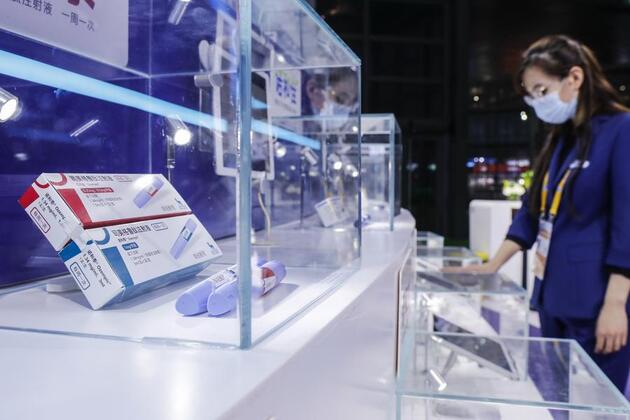
BEIJING, Nov. 25 (Xinhua) -- Diabetes patients troubled by the inconvenience caused by long-term injections may be able to get rid of syringes in future.
A research team led by scholars from Zhejiang University in east China has achieved the world's first non-invasive delivery of insulin through skin, securing a blood sugar-lowering effect comparable to regular insulin injections.
Details regarding this revolutionary approach were recently published in the journal Nature, according to a China Science Daily report.
INSULIN INJECTION CHALLENGE
For hundreds of millions of diabetes patients worldwide, subcutaneous insulin injection remains the standard treatment for both type 1 diabetes and advanced type 2 diabetes. However, the pain and psychological fear associated with daily injections make certain groups, such as children and elderly patients, particularly resistant to this form of treatment.
Repeated injections can also easily cause skin infections and fat hyperplasia, which can affect drug absorption. Some patients even opt to reduce the number of injections, leading to poor blood sugar control. This injection dilemma has long plagued clinical treatment efforts in combating diabetes.
Transdermal drug delivery has a long history, and currently, certain small-molecule drugs, such as anesthetics and those used for treating cardiovascular diseases, have achieved non-invasive transdermal delivery.
However, the skin barrier tends to allow only a few specific small molecules to penetrate. Biological macromolecules like insulin, due to their large molecular weight and complex structure, are difficult to get through the skin barrier.
NEW POLYMER COURIER
Shen Youqing, a professor at the College of Chemical and Biological Engineering at Zhejiang University and co-corresponding author of the paper, led a team that discovered a polymer called OP in preliminary research. It exhibited outstanding permeability in tumor tissues and was able to efficiently deliver anti-tumor drugs.
"From then, we wondered whether OP could also efficiently permeate skin tissues," Shen recalled.
In experiments that followed the initial discovery, the team found that OP also demonstrated high permeability on skin. "This shattered the conventional understanding that macromolecules cannot penetrate the skin barrier," Shen said.
His team then collaborated with teams led by Zhou Ruhong from Zhejiang University and Chen Rongjun from Imperial College London to conduct systematic research, analyzing the specific pathways and mechanisms of OP's penetration through the skin and exploring its potential applications in drug delivery.
Zhou explained that they used molecular dynamics simulations and binding free energy calculations to elucidate this intelligent drug delivery mechanism at the atomic level.
The team also conjugated OP with insulin to create the conjugate chemical OP-I, which can penetrate deep layers of the skin and eventually enters the systemic circulation through lymphatic vessels in the dermis, achieving systemic delivery of insulin.
In the delivery process, OP acts as the "courier," carrying the insulin as the "package" through the skin and delivering it to the bloodstream.
BROAD APPLICATION POTENTIAL
To verify the effectiveness and safety of this transdermal drug delivery technology, the researchers conducted evaluations in two diabetic model animals. The results showed that OP-I can efficiently target key tissues involved in blood sugar regulation, such as the liver, fat and muscles.
Unlike traditional chemical penetration enhancers that disrupt the skin barrier, after continuous administration of OP-I, the animal's skin stratum corneum remained intact, with no expansion of intercellular spaces or side effects such as inflammation. Toxicity tests indicated that OP also possesses extremely high in-vivo safety.
With the progress of clinical research, this new delivery technology may achieve stable blood sugar control simply by applying medication on the skin, significantly improving treatment efficiency, the study showed.
"More importantly, this technology platform is not only applicable to insulin delivery, but can also be used for other important biological macromolecules," Shen said, adding that it has been extended to the delivery of medicines like Liraglutide, Semaglutide, therapeutic proteins, monoclonal antibodies and siRNA.
Currently, the technology has been transferred to enterprises and is advancing toward clinical translation. It not only holds the potential to reshape the delivery system for biological macromolecules, but also offers innovative solutions for chronic diseases requiring long-term injections, such as diabetes and rheumatoid arthritis.
Get a daily dose of Manila Metro news through our daily email, its complimentary and keeps you fully up to date with world and business news as well.
Publish news of your business, community or sports group, personnel appointments, major event and more by submitting a news release to Manila Metro.
More InformationMELBOURNE, Australia: Meta has begun notifying thousands of young Australians that they will soon lose access to Facebook, Instagram,...
TOKYO/BEIJING: China has moved to shut off all Japanese seafood imports, deepening an already volatile diplomatic clash that has rattled...
BEIJING, Nov. 25 (Xinhua) -- Diabetes patients troubled by the inconvenience caused by long-term injections may be able to get rid...
Jeddah [Saudi Arabia], November 25 (ANI): Ace Indian driver Naveen Puligilla and his co-driver Musa Sherif are set to carry India's...
New Delhi [India], November 25 (ANI): Experts noted that ash clouds from Ethiopia's Hayli Gubbi volcanic eruption have reached parts...
BEIJING, Nov. 25 (Xinhua) -- Chinese President Xi Jinping met with visiting King Tupou VI of the Kingdom of Tonga here on Tuesday,...
LOS ANGELES, California: A vintage blue Volkswagen bus that became a symbol of survival after surviving a California wildfire has made...
GENEVA, Switzerland (Big News Network/ANI): - U.S. Secretary of State Marco Rubio voiced confidence after what he described as a constructive...
NEW YORK CITY, New York: President Donald Trump escalated his criticism of ABC and late-night host Jimmy Kimmel this week, posting...
BEIRUT, Lebanon - Israel has shattered the ceasefire with Hezbollah, brokered last year by the United States with yet another assassination....
WASHINGTON, D.C.: Influenza activity across the United States remains low as winter approaches, but health experts say early data is...
WASHINGTON, D.C.: U.S. regulators took a significant step toward closing long-criticized safety gaps in vehicle design on November...